Surfing looks free and easy, and most of the time it is. But the ocean is powerful, the line-up has rules, and a few simple habits keep you and everyone around you safe. This guide covers both: the etiquette that keeps the peace in the water, and the safety basics that every surfer should know before paddling out.
Why etiquette matters
At a busy break, dozens of people want the same waves. Etiquette is not about being polite for its own sake. It decides who rides which wave, and it stops people running each other over with heavy boards. Breaking the rules is the quickest way to make the water dangerous and to make the locals unhappy.
The rules of the line-up
1. The surfer closest to the peak has priority
The peak is where the wave starts to break. The surfer nearest to it, and already paddling for the wave, has the right to ride it. Everyone else pulls back.
2. Do not drop in
Dropping in means taking off on a wave that someone else is already riding. It is the most serious mistake in the water. It can cause collisions, and it ruins the other surfer’s wave. If you realise you have dropped in, get off the wave straight away and apologise.
3. Do not snake
Snaking is paddling around someone to get closer to the peak and steal priority. Everyone notices.
4. Paddle wide, not through the wave
When you paddle back out, go around the breaking waves, through the channel where the waves are not breaking. Never paddle into the path of someone riding. If you are caught in the way, stay where you are and let them steer around you, or paddle towards the whitewash behind them.
5. Hold on to your board
A loose board in a crowded line-up is a weapon. Do not throw your board away when a wave comes. Learn to duck-dive or turtle-roll, or keep a firm grip.
6. Start at the edge
At a new spot, watch for a while before you paddle out. Sit on the shoulder, take the waves others do not want, and be friendly. Respect is earned slowly, especially at breaks where locals surf every day.
Know where you belong
Most accidents happen when people paddle out at a spot that is beyond their level. Point breaks with rock bottoms, strong currents and crowds are not places to learn. Beginners belong at sandy beaches with a coach. If you are not sure whether a spot suits you, ask someone who surfs it every day, or read our overview of surf spots near Tamraght.
Currents: how to stay calm
Water that waves push onto the beach has to flow back out to sea. It often does so in narrow channels called rip currents. They look calmer than the water around them: darker, with fewer breaking waves, sometimes with foam or sand being carried out.
If you are caught in a current:
- Stay calm and keep your board. It floats, and you float with it.
- Do not paddle straight against it. Paddle parallel to the beach until you are out of the pull, then come in with the waves.
- Raise your arm if you need help.
Surfers also use currents on purpose: they are a quick way back out to the line-up. That is fine once you understand them.
Falling safely
You will fall a lot. That is normal. Fall well:
- Fall flat and away from the board, not head first.
- In shallow water, fall flat on your back or your stomach, never dive.
- Cover your head with your arms as you come up, in case the board is above you.
- Look back towards the waves before you climb back on.
Sun, cold and tiredness
- Sun: the reflection off the water doubles the exposure. Water-resistant sun cream on the face, the back of the neck and the backs of the legs. A rash vest helps.
- Cold: the Atlantic is cooler than many people expect. A wetsuit of the right thickness makes a long session possible.
- Tiredness: most injuries happen at the end of a session. When you are tired, catch one last wave in.
Reef, rocks and sea life
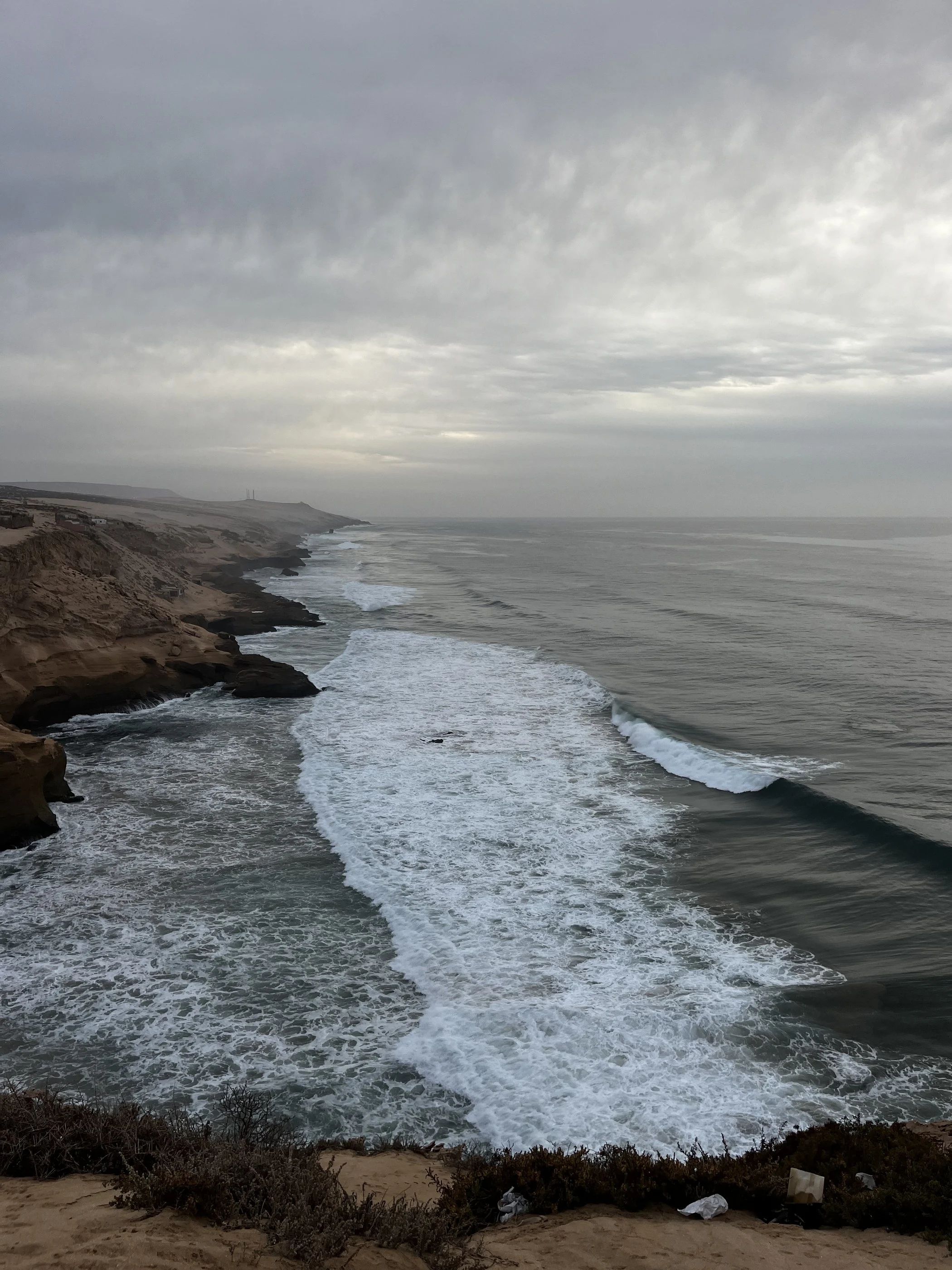
Some breaks around Taghazout have rock or reef under the water. Learn where the shallow parts are before you surf them, and wear booties if the entry is rocky. Small cuts heal slowly in salt water, so clean them well.
Safety on a lesson
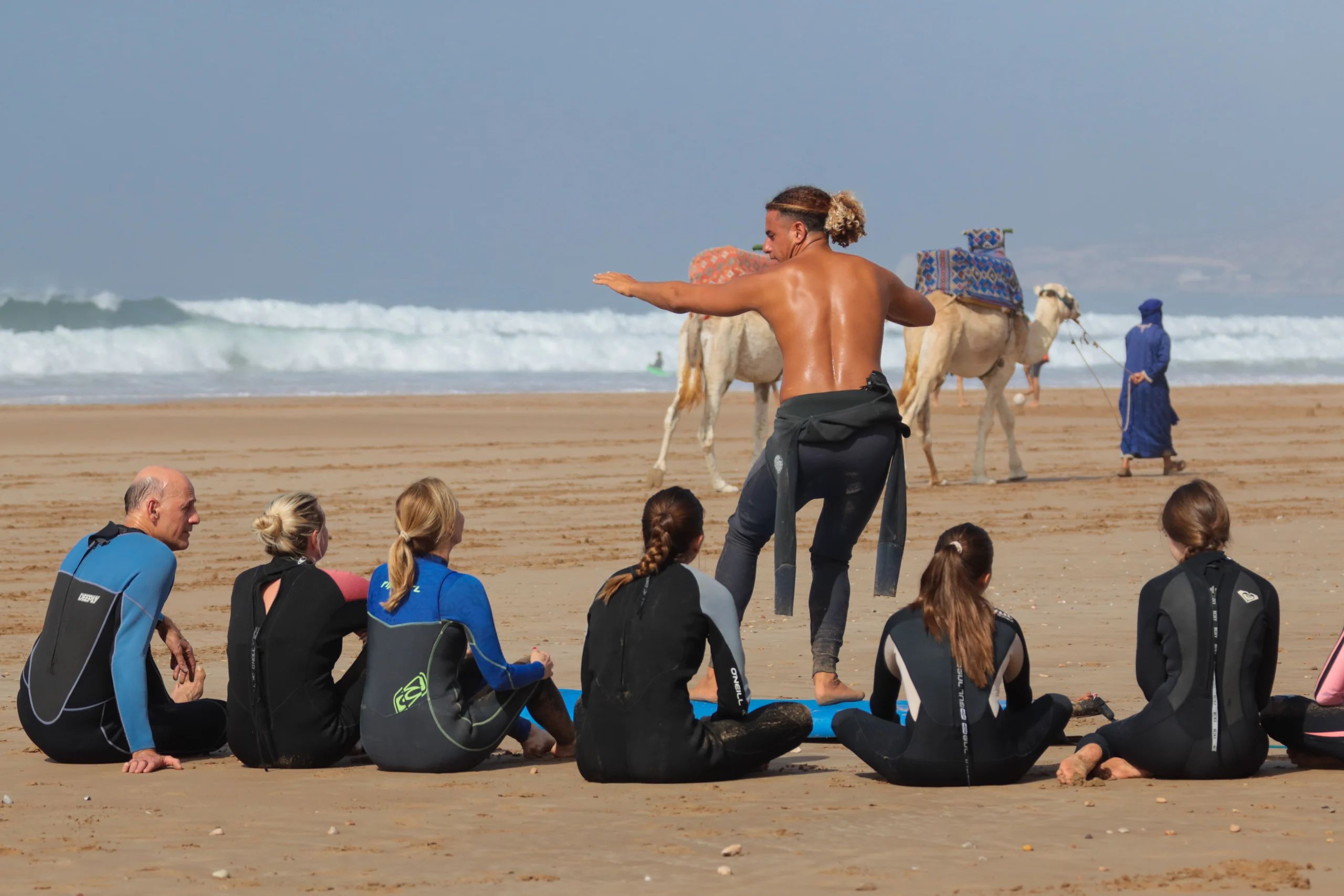
On our lessons, the coach chooses the beach for your level and the conditions of the day, stays in the water with you, and keeps the group together. You can read more about how we work on the about page.
If you see someone in trouble
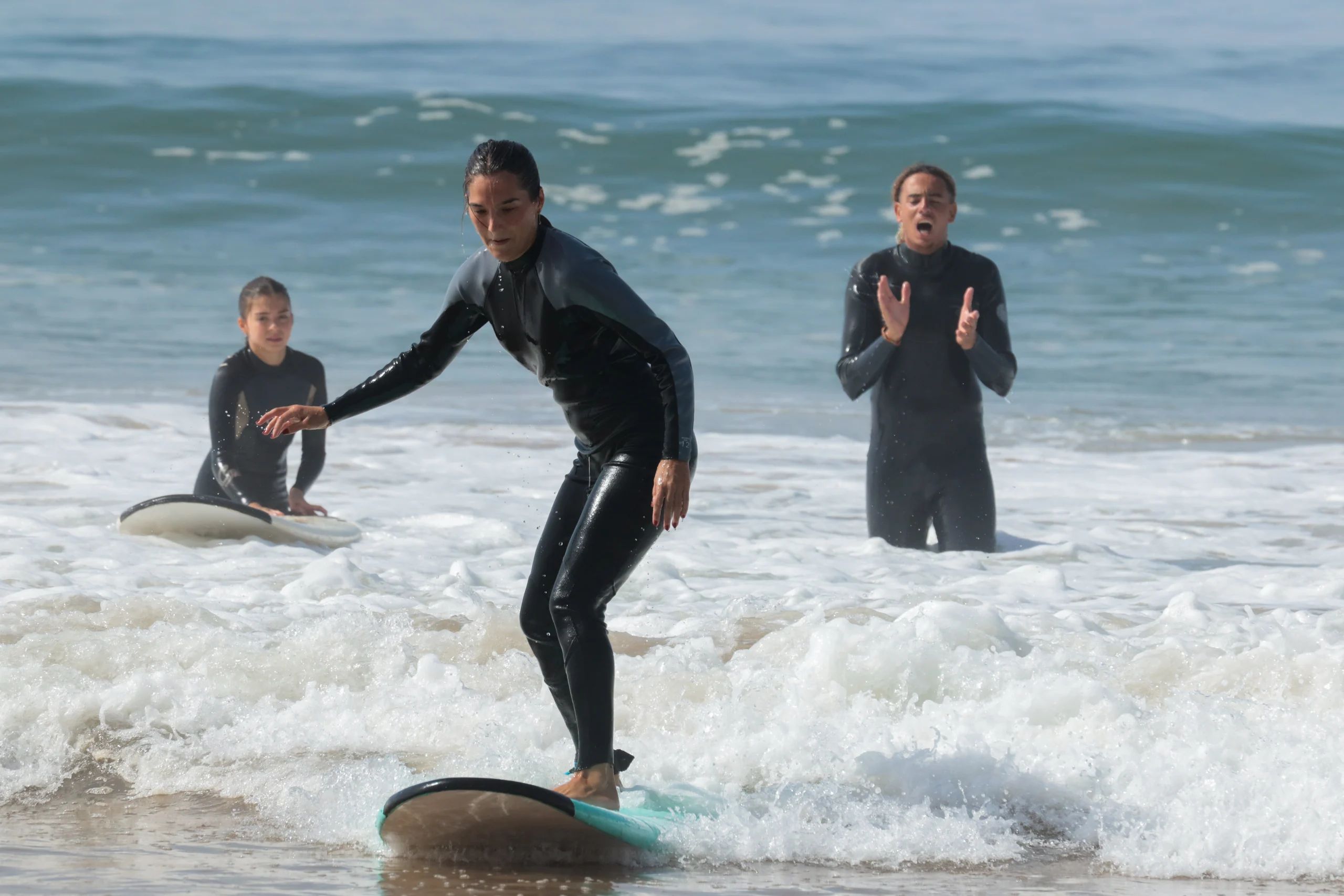
Shout, raise your arm towards the beach, and paddle over only if you can do it safely. Your board floats: push it towards them so they can hold on. Then come in together, with the waves, and get help on the beach.
A short checklist before you paddle out
- Is this spot right for my level today?
- Where is the channel? Where are the rocks?
- Who has priority on the next wave?
- Is my leash attached and in good shape?
- Do I have enough energy to come back in?
If you can answer all five, enjoy it. If not, wait, ask, or choose another spot. New to all this? Start with our guide to surf lessons for beginners.