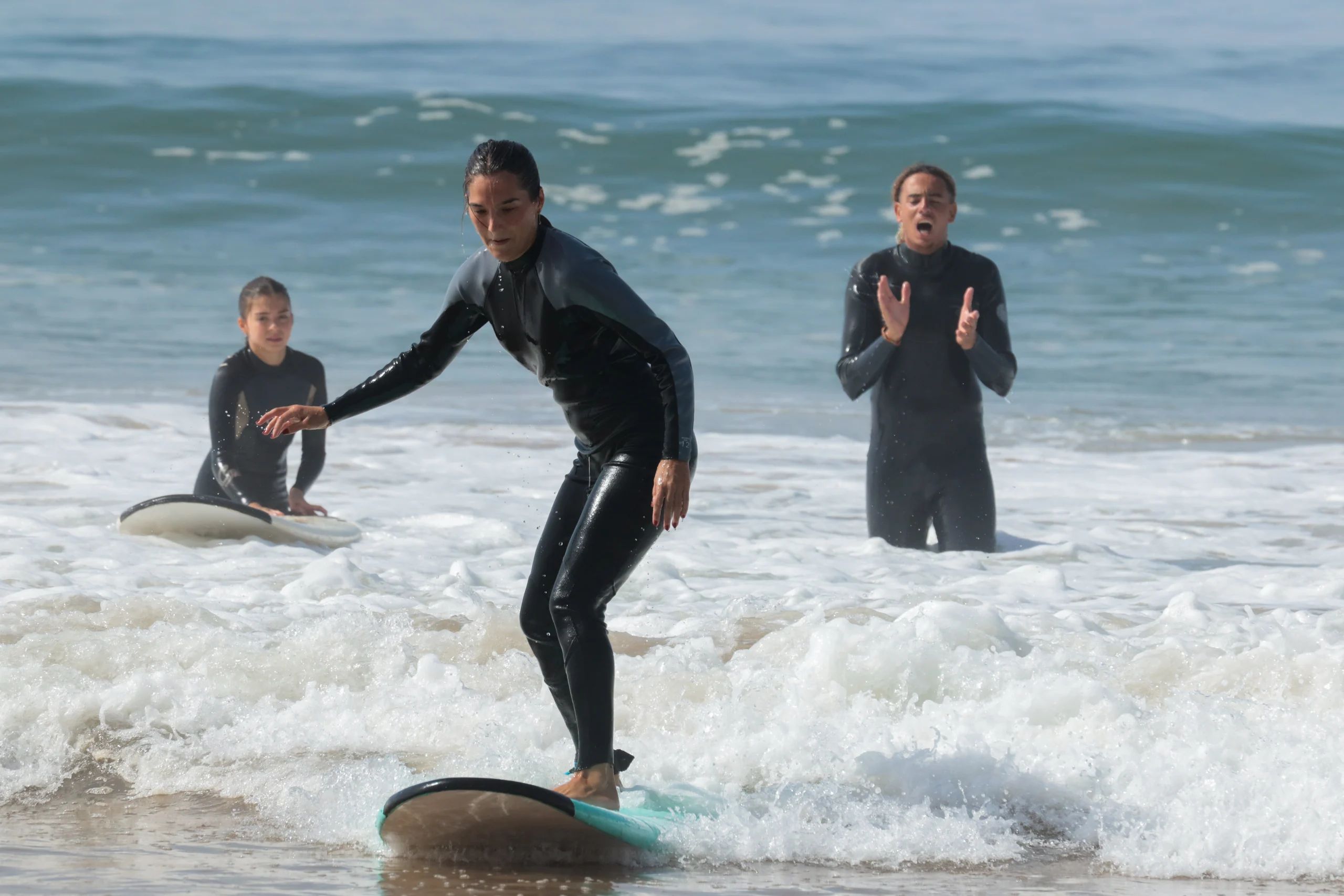
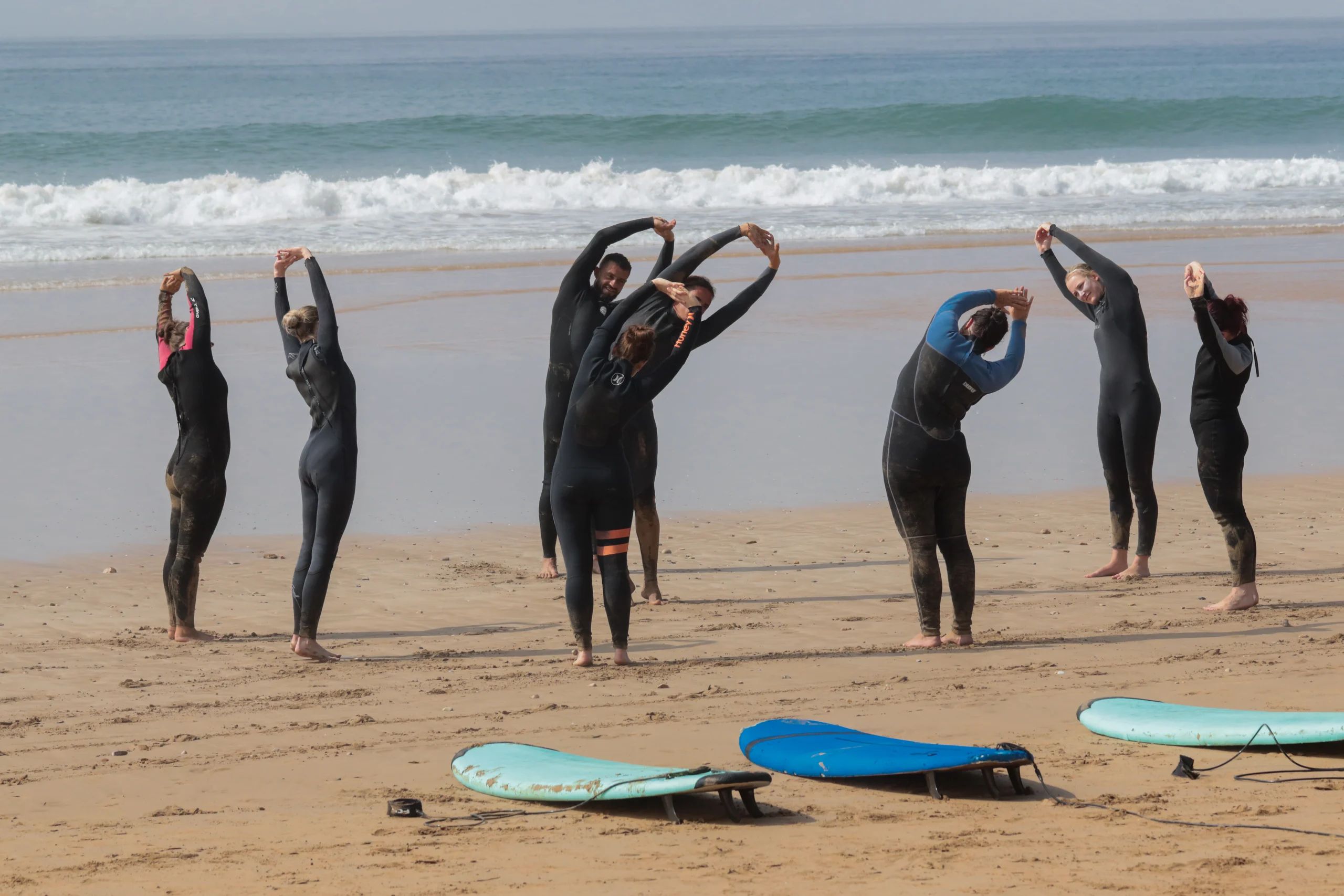
The board you learn on matters more than almost anything else in your first weeks of surfing. The right board makes catching waves easy and standing up possible. The wrong one turns every session into a fight. This guide explains what to look for, in plain words, and when it makes sense to move to something smaller.
The one rule: more foam is easier
A surfboard floats because of its volume: the amount of foam inside it. More volume means the board floats higher, paddles faster and wobbles less when you stand. For a beginner, all three are good news.
That is why almost every surf school starts students on long, wide, thick boards. They look less exciting than the short boards in surf films, but they catch waves far more easily, and catching waves is how you learn.
Soft-top or hard board?
Soft-top boards (often called foamies) have a soft foam deck and a slick bottom. They are the standard for learning, for good reasons:
- They are stable and buoyant.
- They hurt much less when they hit you or someone else.
- They are tough. Dropping one on the sand is not a disaster.
Hard boards (fibreglass or epoxy) are lighter, more responsive and faster on the wave face. They are what you move to once you can catch and ride green waves on your own. For a first board they are less forgiving, and more expensive to damage.
For your first weeks, choose a soft-top. You can rent one from the school instead of buying.
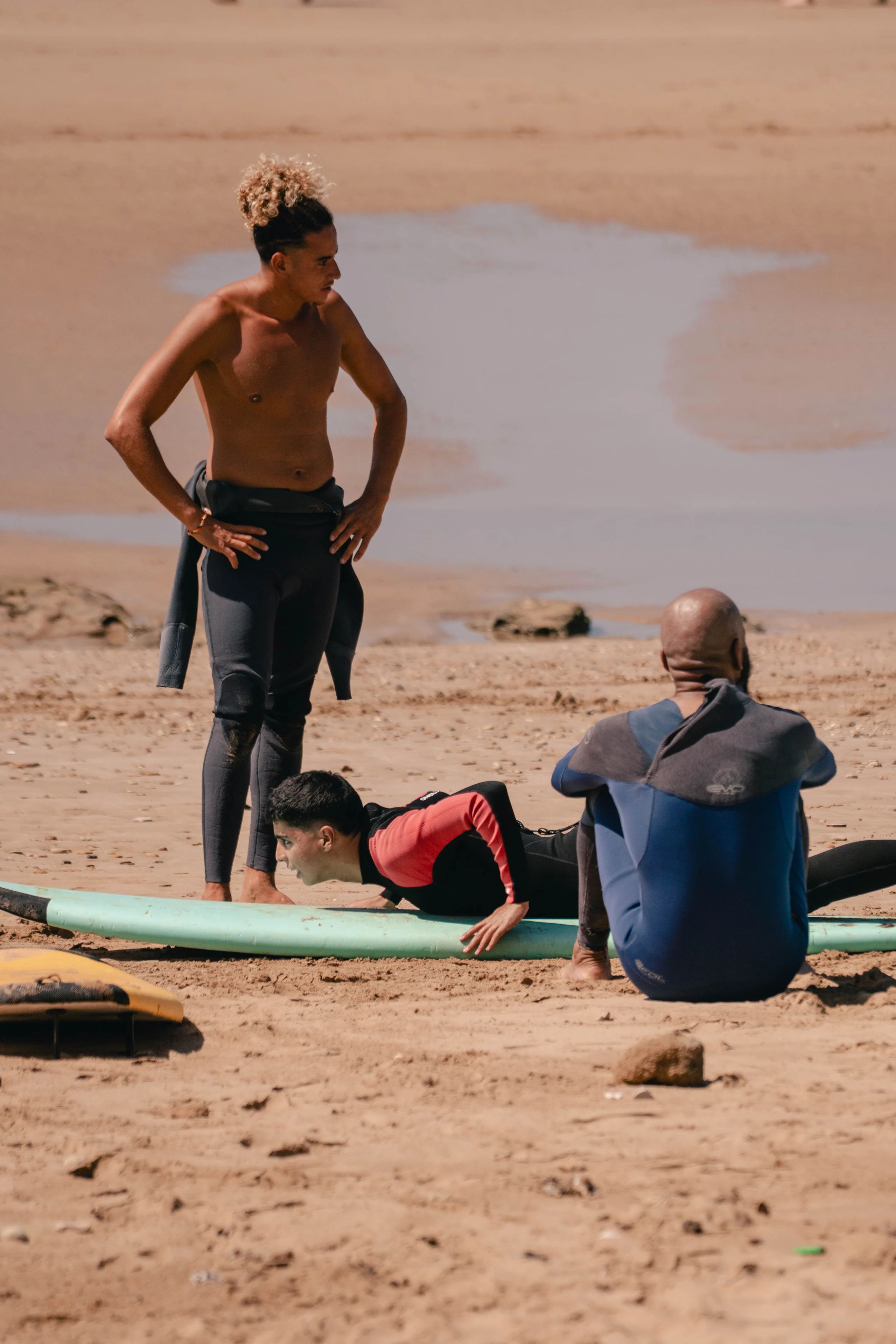
Length, width, thickness
You will see boards described with three numbers, for example 8’0” x 22” x 3”. They are length, width and thickness, in feet and inches.
- Length: longer boards paddle faster and are more stable from front to back. For adults learning, 7 to 9 feet is the usual range.
- Width: wider boards are more stable from side to side. Look for 21 to 23 inches for a first board.
- Thickness: thicker boards float more. Around 3 inches is common for beginner boards.
Many shops now also give the volume in litres. It is the most useful single number, because it combines all three dimensions.
Your weight and fitness matter
Two people of the same level can need very different boards. A heavier surfer needs more volume to float the same way. Someone who swims a lot and has strong shoulders can manage a little less. Someone who has not exercised in a while needs a little more.
When you book lessons, tell the school your height and weight. A good coach picks the board for you, and changes it as you progress.
Fins and leash
Most beginner boards come with three fins and a leash: the cord that attaches the board to your ankle.
- Wear the leash on your back foot: the right ankle if you stand with your left foot forward, the left ankle if you stand with your right foot forward.
- Check the cord before every session. A frayed leash can snap at the worst moment.
- Soft-top fins are usually flexible plastic, so they are less likely to cut you.
When to move to a smaller board
Move down when the big board starts to hold you back, not before. Some signs you are ready:
- You stand up on almost every wave without thinking about it.
- You paddle out past the whitewash on your own on small days.
- You catch unbroken waves and ride along the face, not just straight to the beach.
- The big board feels slow to turn.
Even then, go down gradually. A slightly shorter soft-top or a “mid-length” hard board (around 7 feet, still with plenty of volume) is a much better next step than a short performance board. Many experienced surfers keep a bigger board for small days for exactly this reason.
Should I buy a board for a surf trip?
For a first trip, no. Rent from the school:
- You can change boards as you progress during the week.
- You avoid paying airline fees for board bags.
- You find out what you like before spending money.
If you already surf and want your own board for the trip, ask about rental options first. You may find that a rented board for the local conditions is simpler than carrying yours.
Wax and care
Hard boards need wax on the deck for grip. Soft-tops usually do not, although some people add a little. After a session:
- Rinse the board with fresh water when you can.
- Keep it out of the direct sun. Heat damages foam and wax.
- Carry it with the fins facing away from your body.
Common mistakes
- Moving to a short board too early. It feels like progress, but you catch fewer waves and learn less.
- Choosing a board for the waves you want, not the waves you have. Most of your sessions will be on small days.
- Forgetting the leash check. A worn cord is cheap to replace and expensive to lose.
A quick checklist
- First board: soft-top, long and wide, plenty of volume.
- Tell the school your height and weight.
- Leash on your back foot, checked before every session.
- Move down slowly, and only when the big board holds you back.
Questions about which board you will use on your lessons? Send us a message or read about surf lessons for beginners in Taghazout. For a sense of the levels and what each one works on, see how to choose your surf level.