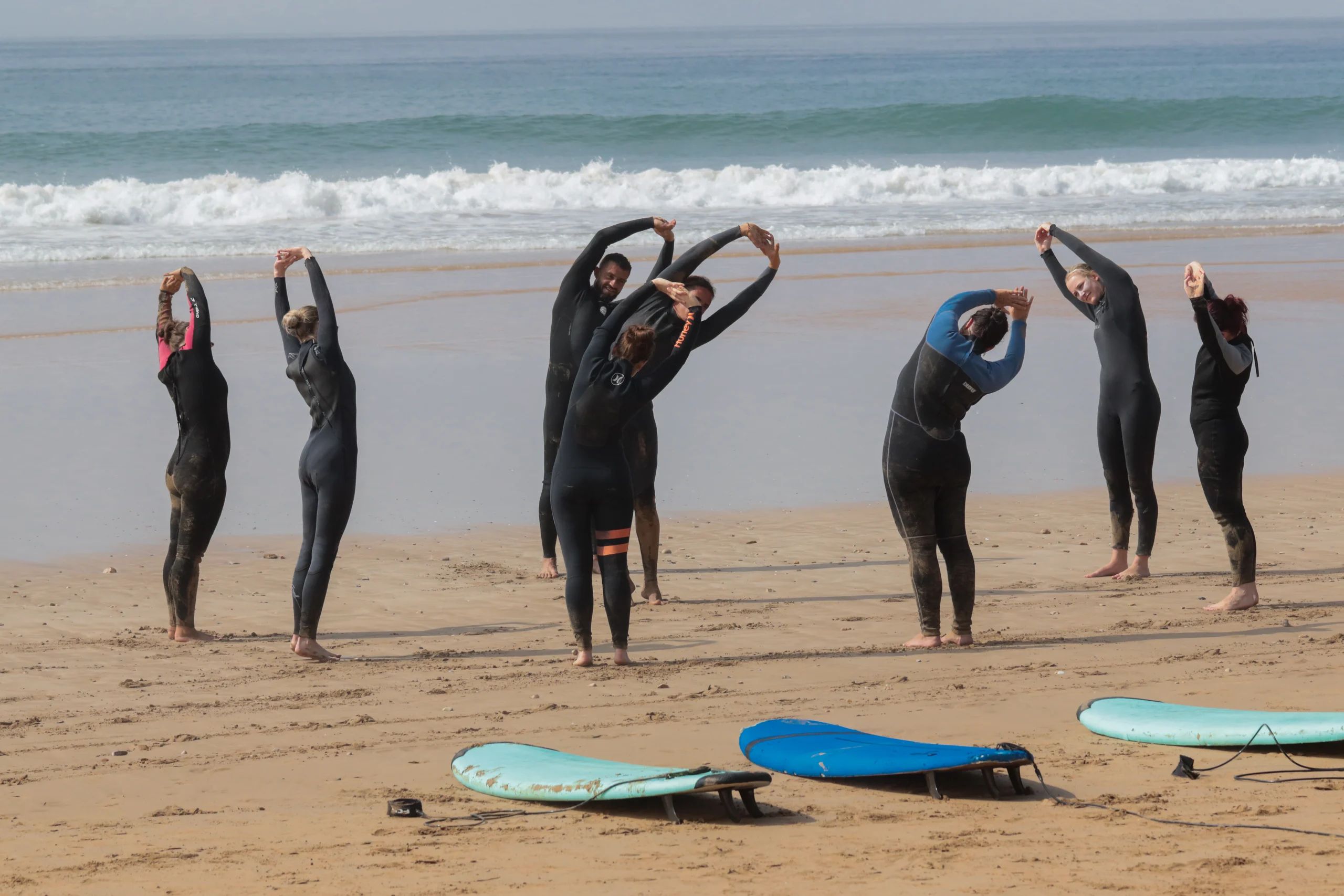
Most people choose a surf level that is either too low or too high. Too low and you spend a week in the whitewash when you could be learning to ride green waves. Too high and you spend it paddling, scared and tired, at a spot that is beyond you.
Here is a simple way to choose. If you would rather answer a few questions, take the level quiz instead.
Beginner
You are a beginner if any of these is true:
- You have never surfed, or only once or twice.
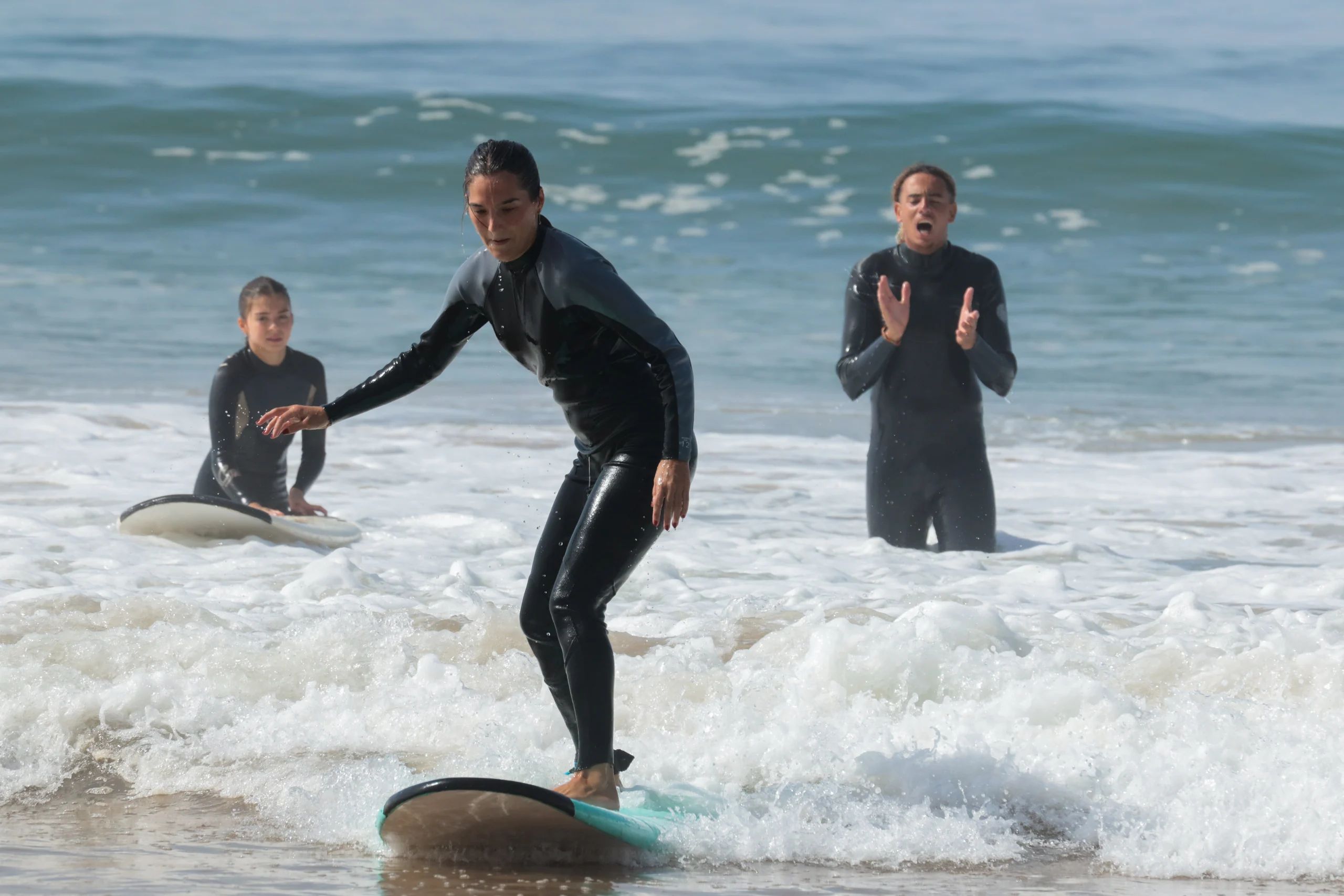
- You cannot yet stand up on the board most times you try in the whitewash.
- You are not sure how to get back to the beach if something goes wrong.
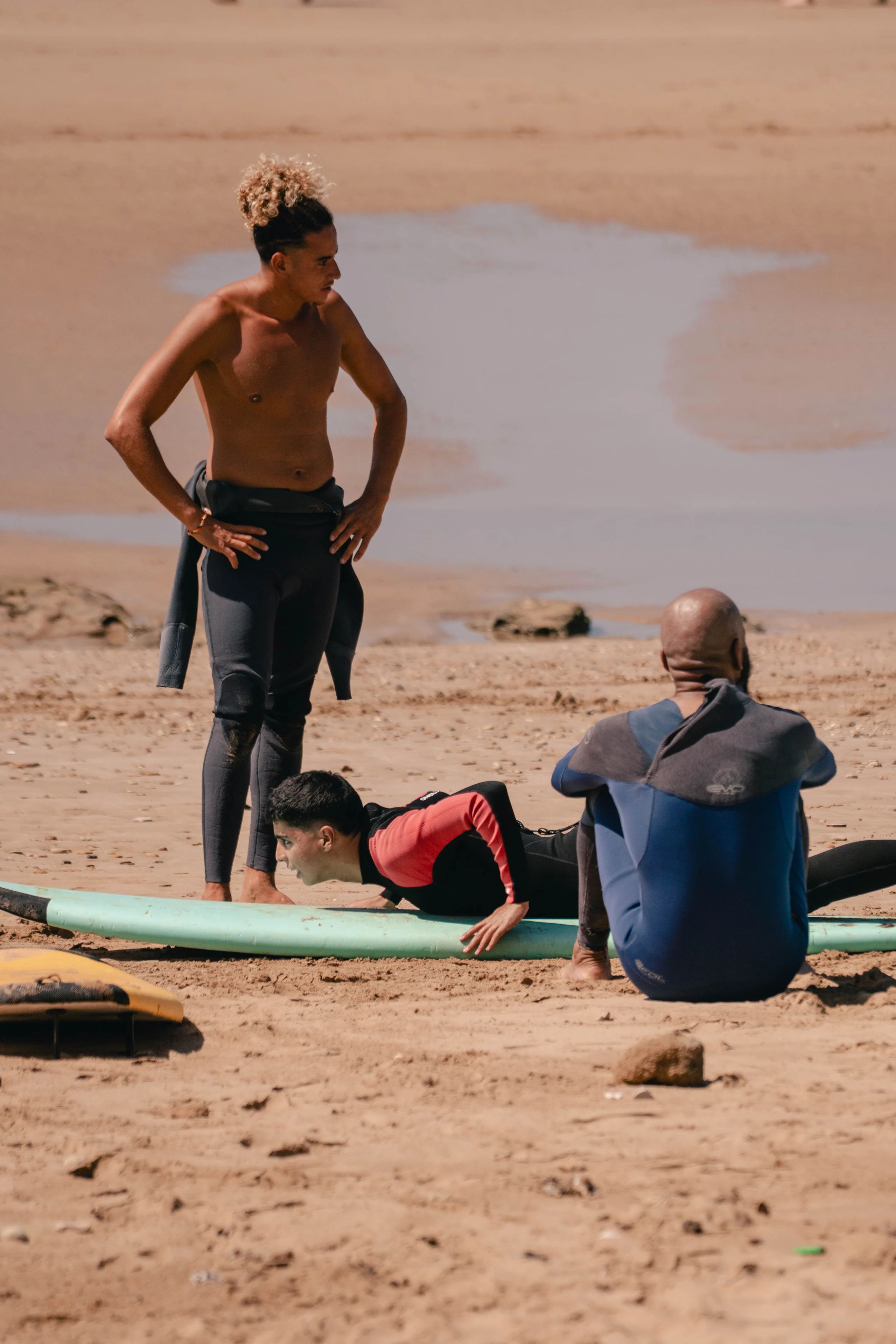
What you work on: the pop-up, stance, balance, how to read the whitewash, and ocean safety. The goal for the week is to stand up reliably and ride straight towards the beach on your own.
Where: sandy beach breaks, usually in waist-deep water.
There is nothing wrong with being a beginner for longer than you expected. Most people who think they are intermediate after one week are still beginners, and that is fine.
Intermediate
You are probably an intermediate if all of these are true:
- You stand up reliably in the whitewash.
- You can paddle out past the breaking waves on a small day by yourself.
- You have caught at least a few unbroken (green) waves, even if you did not ride them far.
What you work on: paddling position and timing to catch green waves, riding along the wave instead of straight to the beach, your first real turns, and how to behave in a line-up.
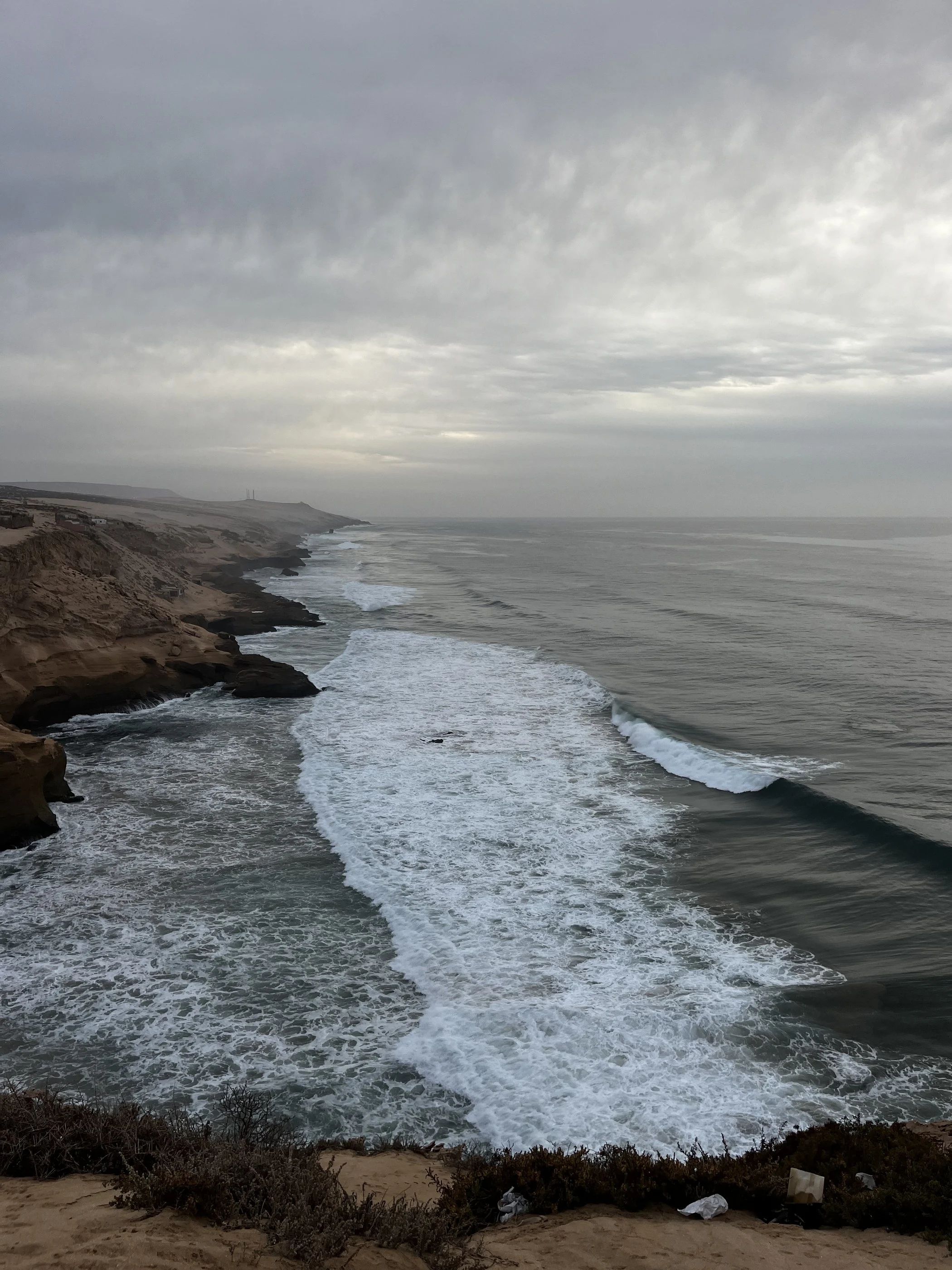
Where: beach breaks on bigger days, and gentler point breaks when the conditions are right.
Advanced
You are advanced if:
- You catch green waves on your own most sessions.
- You ride along the face of the wave and can turn in both directions.
- You are comfortable in waves around head height and know line-up etiquette.
What you work on: line choice, speed, reading the sets, positioning at the points, and specific manoeuvres. Video feedback helps a lot at this stage.
Where: the point breaks, chosen for the swell of the day. If you only want someone to pick the spot and take you there, surf guiding may suit you better than lessons.
When you are between two levels
Choose the lower one. It is easy to move up after the first session if the coach sees you are ready, and you will get more waves and more confidence in the meantime. Moving down after a bad first day is much harder on your motivation.
Things that change your level
Your level is not only about what you did on your last trip:
- Time out of the water. If it has been a year or more, start a level lower.
- Fitness. Paddling is most of surfing. If you are not fit, you will tire quickly in bigger waves.
- Board. If you learned on a big soft-top, you will be a level lower on a smaller hard board at first.
- Conditions. An intermediate in small summer waves can be a beginner on a big winter day.
Tell us honestly
When you message us, describe what you can do, not what you would like to do. Something like “I stand up most of the time in the whitewash but have never caught a green wave” tells us exactly where to start.
Read more: the beginner’s guide to surfing in Tamraght, or go straight to levels and prices.